Wednesday, July 11, 2012

Procrastination Investigation: Medicinal Cannibalism and the Dogged Return of the Sack Man


I thought that I was done with the Sack Man after my handful of posts from earlier this year (it really was a full six months of Sack People, wasn't it? how depressiiiing). I find this kind of spooky, sinister, historically based folk-stuff absorbing and exciting, but even I have my limits. It eventually starts to get tired and depressing and macabre -- not the fun kind of macabre, but the truly sordid, disturbing kind of macabre -- especially when what was once all fun and fantastical games turns out to be all too real. It's sobering. When I finished my final Enriqueta Martí post in June, I thought that I had "exorcised" the fascination once and for all. But just like any other kind of unfinished business, the specter of the Sack Man popped up into my imagination yet again. Even Procrastination Investigations can haunt and spook. 
Egyptians embalming a corpse, source.
Enter the Smithsonian Magazine's May 7 article "The Gruesome History of Eating Corpses as Medicine."*


The article, written by Maria Dolan, highlights the recent work of Dr. Louise Noble of the University of New England, Australia, and Dr. Richard Sugg of Durham University, England. In their most recent books, they (separately, they aren't collaborators) explain that for centuries -- peaking in the 16th and 17th c. -- many Europeans ingested wildly popular "remedies" containing human bone, fat, and blood for ailments running from headaches to epilepsy. BOOM, THIS SOUNDS FAMILIAR. These medicaments were frequently used by royals, priests, and scientists, and lead to the desecration of ancient burial grounds in both Egypt (powdered mummy was quite popular) and Ireland (ancient powdered skull, too).** The proles made due stealing from local graveyards and gathering free blood and body parts at public executions. Dolan writes:


"... consuming human remains fit with the leading medical theories of the day. 'It emerged from homeopathic ideas,' says Noble. 'It's "like cures like." So you eat ground up skull for pains of the head.' Or drink blood for diseases of the blood."

AHORA TODO TIENE SENTIDOOO. "Like cures like." In the case of the consumptive (tubercular) patient in the late 19th/early 20th centuries -- whose illness mainly manifested itself in malaise, dwindling body weight, and the coughing up of blood -- "new" blood cures "bad" blood. These folk-remedies -- poultices made with bodily fats, drinking the blood of children -- bound-up in the Sack Man folk-mythology make quite a bit more sense now that we can "read" them as part of a long-standing, European medicinal tradition. What at the turn of the century were "old-wives"/witches' cures, or "home-remedies", had previously been the status quo -- medicaments favored by the rich and powerful -- for millennia. 


The execution of Charles I of England. Note spectators sopping up the beheaded king's blood,
presumably for consumption. Source: National Galleries of Scotland
The article goes on to reference other academics working on the history of European corpse medicine, detailing the eventual discrediting of medicinal cannibalism by the European medical elite -- and the sway it still held over the common people even centuries later -- in this way:


"As science strode forward, however, cannibal remedies died out. The practice dwindled in the 18th century... But Sugg found some late examples of corpse medicine: In 1847, an Englishman was advised to mix the skull of a young woman with treacle (molasses) and feed it to his daughter to cure her epilepsy... A belief that a magical candle made from human fat, called a 'thieves candle,' could stupefy and paralyze a person lasted into the 1880s. Mummy was sold as medicine in a German medical catalogue at the beginning of the 20th century. And in 1908, a last known attempt was made in Germany to swallow blood at the scaffold."

I read the above passage and just yelled at my computer screen: "Helloooo! Sack People! In Spain! Until 100 years ago!!! That was happening too and at the same time!!!" The Sack Man is just part of a larger story. 

Dolan goes on to make other excellent points, highlighting the hypocrisy of the European Imperialist that reviled the cannibalism encountered in the New World, and ends the article exposing the hypocrisies underlying our own current day revulsions by deftly connecting the corpse medicine/medicinal cannibalism of yesteryear with present-day medical practices and research (namely, blood transfusions, organ transplants, skin grafts, stem-cell research). But, of course, I'm still too fixated on the Sack People to even start considering all these new (post)colonial connections (though they are compelling).

At the very end, she touches on the global black market trade in body parts/organs, and my synapses immediately start firing at top speed.

Sack People: they're still out there, adapting and evolving just like the rest of us.***

In true PI form, I diligently researched and scrounged up a handful of publications examining the subject further. If you're interested, Noble's 2011 text is here. Sugg's more recent 2012 text is here. I love both their titles.

Other web articles and scholarly texts (not mentioned in the Smithsonian article) are here, here, and here (and I'm throwing in this Daily Mail article because it references one of my favorite disturbing-movies-I-watched-too-young, Alive). Of course, we fall even further down the rabbit hole with these other texts that, instead of considering corpse medicine, deal with out-right cannibalism perpetuated by Europeans in times of war and famine (equally as fascinating, by the way). You're welcome.

Cannibalism in Russia and Lithuania, 1571. Source.
All these publications attest to the popularity of the study of Western cannibalism in the academe right now (it's a thing, okay? just like how the zombie apocalypse is a thing? I'm actually getting to be so over the zombie apocalypse and bath salts and all the rest of it...) and it seems as if there's only more to come. 


The more I learn, the more normal the abnormal becomes. Or is it that the more abnormal the normal becomes? Oh, Sack Man. And again, the things we forget. 

***

* I would be remiss to not mention that I found said Smithsonian Mag article through the blog of The Order of the Good Death, an arts and science collective (founded in 2011 by Los Angeles-based mortician Caitlin Doughty) that examines mortality, death, and how we currently face them (and fear them) in our the modern (Western) world. See the post with the link to the Smithsonian Mag here, and a second OGD blog post on corpse medicine here. I think their work is wonderful and fascinating and it's given me nightmares and I just can't get enough of it. Have you seen Doughty's "Ask a Mortician" webseries? Oh my god, go and be amazed!
** Let's not even get into the fetishistic/Imperialistic implications of the consumption of ground up skull taken from ancient Egyptian tombs and Irish burial grounds because it's so repulsive that it makes my brain turn to goo. 
*** I know, I sound like an X-File. I don't care.

Sunday, July 8, 2012

Point of Contention: Squirrel's Nest

Over the past couple of weeks, I've been forced into some unsavory "arguments" in my front yard with a squirrel. The scene is always set in the same way: I'm lying in my hammock (see photo here), enjoying the stupendous outdoors, and a squirrel comes and sits high up in one of the oak tree's trunks and starts barking at me. 

And barking. And barking. 

And I stare at it. And it barks some more. And I stare. And it eventually moves further up the oak tree trunk (as it continues to bark at me), and we stare at each other until it finally shoots up the tree and jumps across to another and leaves. 

And for the longest time I thought: "What an jerk." Because, really, what was I doing to him/her/it? I was just lying in my hammock, minding my own business, reading my books or perusing the web on my laptop. Innocuous, innocent, unobtrusive. 

Until the afternoon that I chanced to gaze straight up from my supine position in the hammock.

Take a look: 
 Look closer...
 Now look closest.
That tree trunk you see is directly next to my hammock (in fact, it is the very trunk from which one of my hammock's ends hangs). That tangled knot of twigs and leaves and who knows what else that you see in the background of the photo(s) is a squirrel's nest. And, gathering from all the barking and glaring and staring and "arguments", is the squirrel nest of my little rodent foe.

I feel bad.

Said trunk is the the one from which said squirrel must climb to reach it's home.

I feel bad, but clearly not so bad that I abandon the hammock. And that makes me feel worse -- like some kind of horrible stealer of territory, a colonialist of front yard space, a neighborhood conquistador... But, you know what?

Whatever. It's a squirrel. It's an oak tree. It's a hammock. Let's all just get along.


Saturday, June 30, 2012

Kitchen (mis)Adventure: Magical Basil Gazpacho

Here it is, my first batch of magical basil gazpacho. OH YEAH. I decided to err on the side of caution this go around, and only made half the quantity of gazpacho as last time. It took me over a week to drink the whole pitcher, after all.  You may or may not be able to tell that I puréed the crap out of it in hopes that the smoother texture would be more pleasing to Jason, but alas, I just don't think he's much of a fan of the idea of cold soups.*
Apart from the magical midsummer basil (both Genovese and spicy Cuban), I gazpacho'd with what I had on hand: sweet baby bell peppers, jarred fire-roasted red pepper, a yellow onion (if I could, I would have used a red onion, a la Sarah T), garlic, Roma tomatoes, and an enormous cucumber (I only used half). I threw in a generous handful of toasted almonds for a little protein, something my mother does because she's a genius, and blended away with slightly less sherry vinegar and olive oil than last time and double the water. Tasty.
I think the gazpacho turned out great. But as I drank it, I suddenly had a craving for cheese. Fresh mozzarella cheese. IT TASTED JUST A LITTLE TOO MUCH LIKE CAPRESE SALAD WHAT HAVE I DONE.


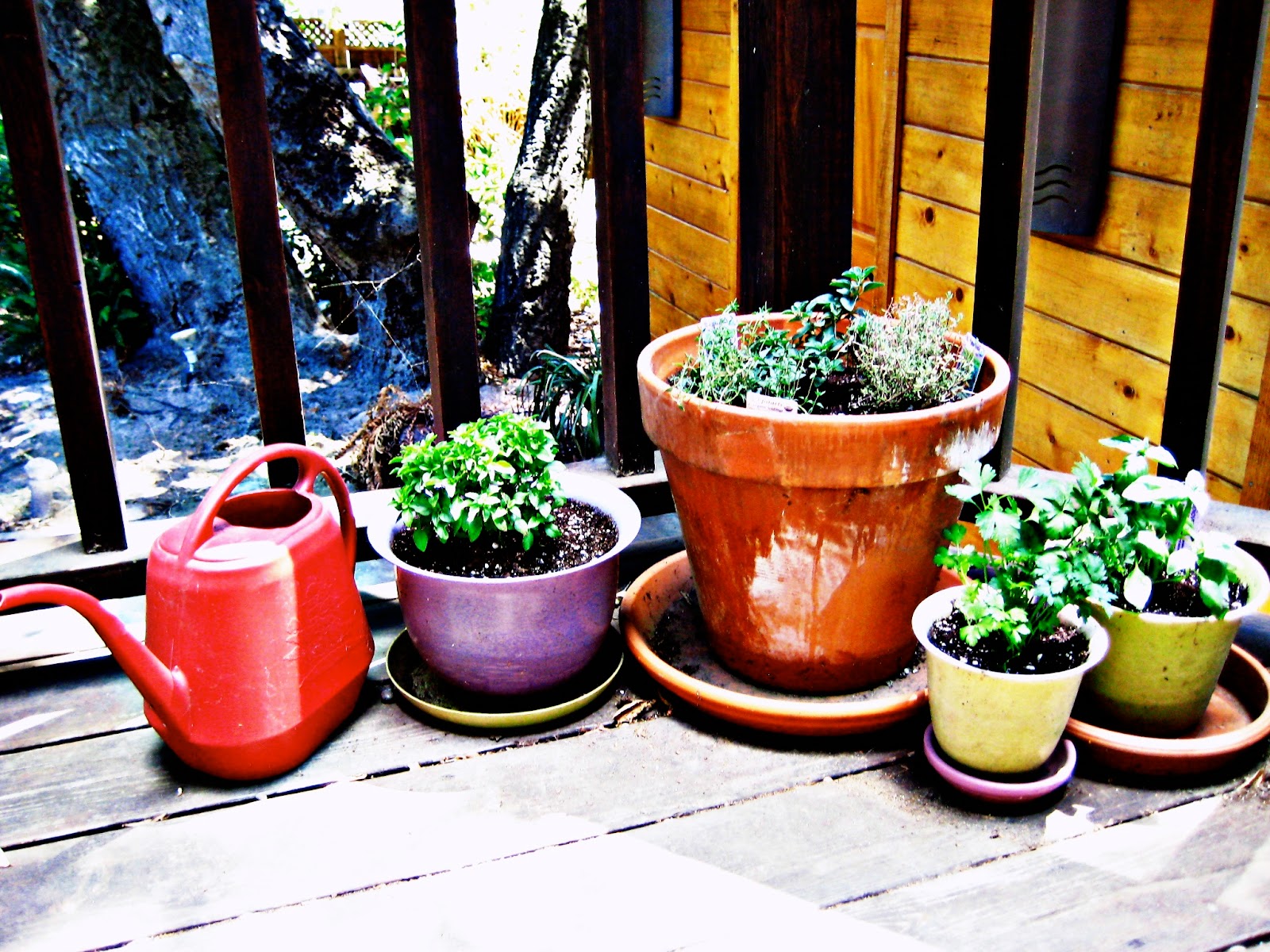
Summer: caprese salads, gazpacho, soda water (yes, I made some after finally potting my magical herbs and feeding the citrus trees this morning), postcards, and the list goes on.
* Speaking of cold soups, TheKitchn highlighted a Mark Bittman New York Times article on cold soup recipes and they look really, really super. Check out the recipes here

Friday, June 29, 2012

Summertime is for Postcards

The first postcard of the summer:
It makes me really happy that Sarah T would go to tour an old 19th century operating theater in London, think of me, remember how much I love receiving postcards, and send me one showcasing said operating theater as a surprise.
Is that a sneaky Roscoe photo bomb?
Gothic operating theater hidden in a church tower. Sarah T knows me all too well. Remember that, when I linked to her travel blog, I expressly mentioned how much I enjoyed her post on that operating theater tour! You've already received an email, but, again, thank you, Sarah T.

I love, love, love postcards. I think they're a terrific medium of communication, especially for summertime travels. They're short and sweet and wonderful. A couple of years ago, after moving back to California from NYC, I started carrying around a roll of postcard stamps in my purse. Since then, if I'm out and about, and find a postcard that reminds me of someone I know and love, I can jot down a couple of lines and send it off on any old moment's whim.
Must remember to feed the citrus trees.
I started collecting Santa Cruz/Central Coast postcards a couple of weeks ago for a little postcard/diary/writing project collaboration I'm doing with my super friend Emily C.* She left Santa Cruz for Europe about a month ago and won't be back until September. I'm missing her tons, not only because she's my closest friend in town but because she's also been my most immediate sounding board for books I'm reading, research I'm doing, DEEP THOUGHTS I'm having, etc. This is a nice way to keep a log of the things we're reading/thinking/writing that we want to bookmark for discussion when she gets back into town at the end of the summer. It's kind of like having a phantom dialogue. Spooky and I like it.
BOOM, is that a SodaStream next to my decorative bat house? Yes, I have a decorative bat house.
I got Sarah T's postcard in the mail before leaving the house to run errands with Jason in town. I must have had her subconsciously on the brain when we arrived at Costco and I spied a mondo stack of pleasantly marked-down SodaStream soda makers and lost my miiiind. I shrieked "Sarah T and DB have one! Sarah T and DB have one!"** and started pawing at a box. Jason asked me if I wanted one for my birthday (which is still two months away), and I said "no, no, no, no...", and then he took the box and put it in our cart, and I said something to the effect of "we can just keep it in the cart and wait until we're in line to pay to decide..."***, and next thing we know I've completely rationalized buying the soda maker. For my birthday. In two months.

We immediately set it up upon returning home and indulged in some home-made Dr. Pepper rip-off and it was diviiiiine. I'm going to use it all the time to make lemon juice soda water and it's going to be even betterrrrr.


Summer: postcards, soda water, and gazpacho. Expect a post on magical basil gazpacho soon. Tomorrow?

***


* Check out Emily's fantastic website, If She Draws a Doorhere.
** They use their soda maker to carbonate water for dinner, and I'm so impressed every time I stay with them and we have home-made soda water with our meals. Or have soda water by itself. Who needs an excuse for drinking fizzy water?
*** I do this often in places like Costco or Target. It actually works surprisingly well to counteract impulse shopping (except for this time).

Tuesday, June 26, 2012

Typical Espanish: Gazpachooo

Thank you, thank you, thank you, Claudia, for sending me this fabulous video Sunday. I've listened to it over and over and over. You've ensured that this innocent gazpacho kick explode into a full-blown gazpacho obsession. It's all I can think about, and now, it's all I hear. I sing the song's refrain in my dreams. Jason is living a nightmare.

La Ogra presents her summer hit: "Gazpacho".* It's a year old, but it's new to me, and it's become my summer anthem. Here's to the summer of gazpacho!
As soon as I've finished this first batch (I'm so close), I'm going to make a new, decidedly smaller, batch using some of that fancy Cuban Basil I got on St. John's Eve. Magical, basil gazpacho? Yes, yes, a thousand times yes!!!

* Did I buy the single on iTunes? You bet I did.